What is Cocone’s UX?


※This article is machine translated.
What does UX mean?
Ishiwatari: Could you tell us what the UX designer team has been up to?
M: In the first half of 2016, the UI designers were brought together and told to think about user experience properly and we became the UX team. We designers were a group of people with UI experience. Of course I think I know what UX means, but at first I was really groping around, reading the books that were assigned to me. There was a time when we were just thinking about what we should ask for beyond that, but we were not advancing.
Ishiwatari: How about now?
M: There was a turning point, and I think we might be able to make it! M: There was a turning point for me. After the UI designers, who had originally been placed in different teams within the company, were integrated into the UX team as a whole, I started helping the language team.
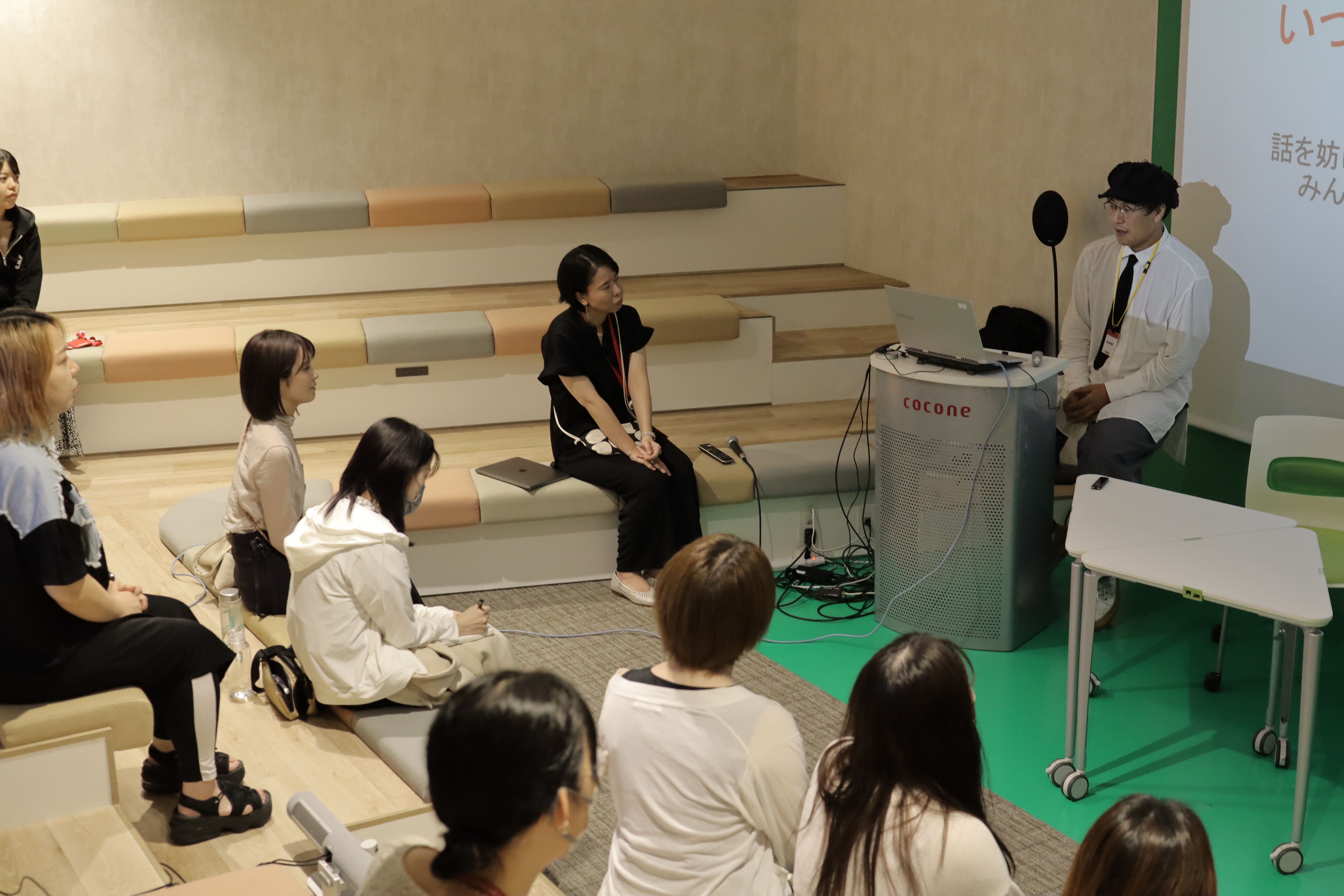
Right now, the language team is desperately trying to figure out how to make learning English memorable, usable, and fun. There I was given a subject as a UX designer and given the opportunity to present it in between work.
Ishiwatari: It looked like a lot of work, but it looked like fun.
Designers gather in search of “evidence.”
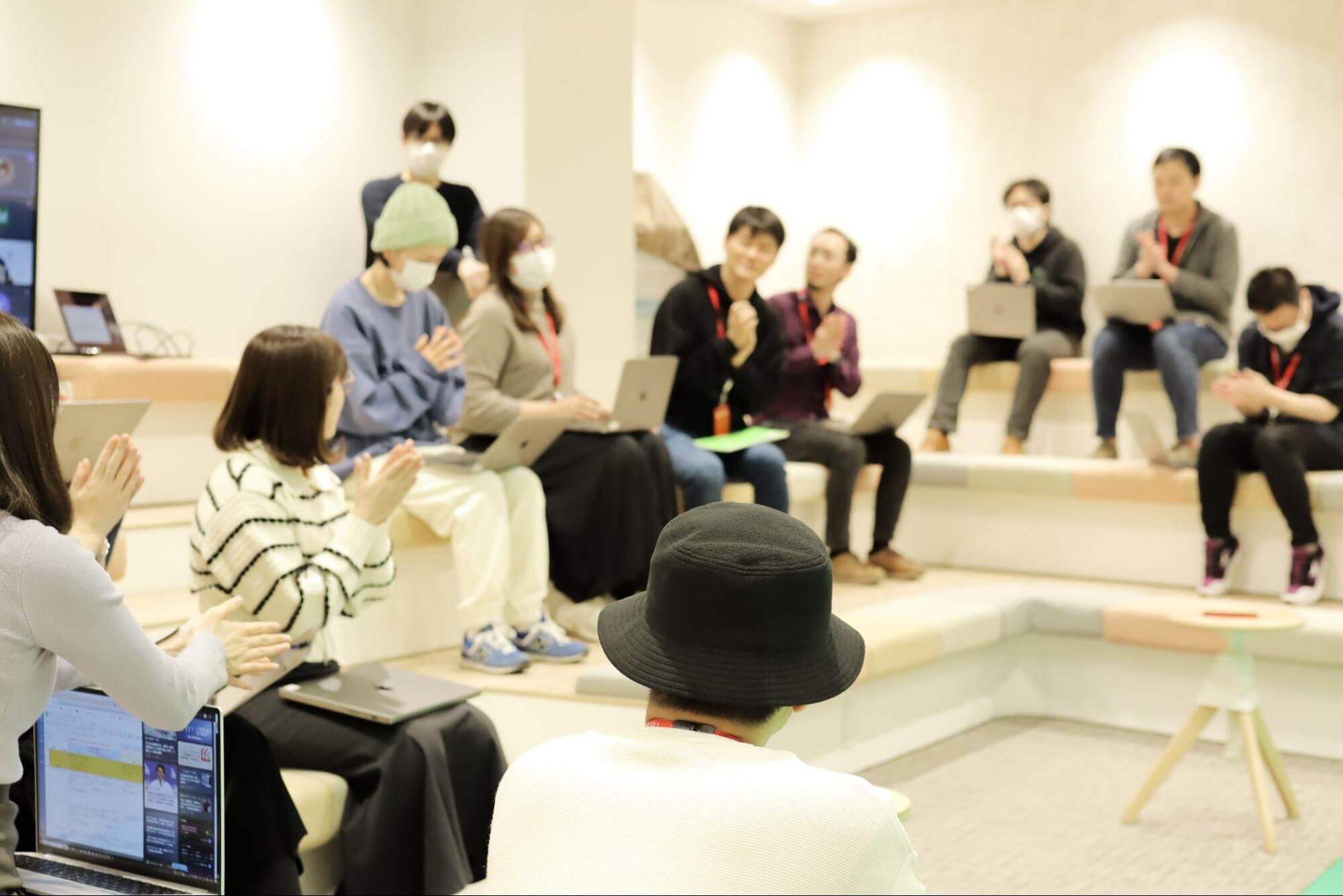
M: “Is the operating method appropriate for the English language app that the language team is aiming for?” M: UX designers from within the company gathered to thoroughly examine the question, “Is the operating method appropriate for the English language app that the language team is aiming for?
Ishiwata: How did you proceed?
M: At first, I started creating with my senses. By senses, I mean that I tried to twist something out of it within the scope of the knowledge and experience I had. I thought I did a reasonably good job, but the representative told me, ” You have to convince me with something grounded.” From there, it became a weekly presentation; I thought it would end after one presentation, but I was told to bring it back again next week.
Ishiwata: You were doing even more in between operations.
M: Yes, that’s right. But after the representative gave me the word “evidence,” all the members read the book at once. Books on UX, of course. Not only that, cognitive science books, books about memory, about the connection between what we see and our brains.
I was learning things like, “What you learn is retained when you go to bed at night, and what happens to your brain when you review it again in the morning. And what happens to your brain when you review it again in the morning?” Once I started studying again what I already knew, it became a lot of fun. If I tried to give a presentation based only on my own knowledge and experience, it would be empty after one presentation, but when I studied, the next idea came to me. It may sound obvious, but I finally became able to do that.
Ishiwatari: So your team’s theme for the second half of the year!
M: ” Kirari, stretch!” (Laughter)
It’s not quite there yet, but I feel like I have a good grasp of how to grow. The representative always asked me to submit two proposals every week. I would study and formulate what I realized, and repeat the process.
S: What was in my head became logical, verbalized, and shared among us.
Ishiwatari: I think I’m going to have a fever of wisdom!
S: We each had our own field teams to work with, but it became fun and wasn’t hard.
“That’s funny!” To be told
M: We ended up presenting about five weeks in a row besides the workshop we did ourselves. The representative of the company has built the foundation of the company that made Hange number one in Japan and is now even listed on the stock exchange as a line. I can tell that he was successful once, in a good way, and now he thinks, “What is a really good company and a good organization?
The employees can tell that they care about everyone, and their policies are always consistent. This time, too, they gave us, the UX design team, a theme, which shows that they really care about the growth of their members.
The representative himself is serious about UX design as Cocone together with us. He also gives us direction and impetus so that everyone can talk about it in their own words. I really feel like they are guiding us well. They seriously point out things that make us want to submit something of our own. I just want the representative to say, “Yeah, that’s interesting. It makes me feel that way.
Ishiwatari: Did you get ” Yes, it’s interesting.
M & S: maybe 。。。。 I got it!
Ishiwatari: I’m looking forward to the language service!
M: I want to infuse the feeling I’ve grasped in this way into our internal team more and more. I feel like I have a grasp of how to respond, and I can’t wait to try it out. After a number of sessions, we have been able to verbalize and share our knowledge and experiences, so we are gradually getting a better understanding of how our team members approach things.
S: It’s like you want to go from being lost to having a map, wearing solid shoes, and now you want to jump out and gain a lot of strength.
M: I think it was a turning point for us because they pushed us into a situation where we had to do it, and since the entire UX designer team handled it, we were able to share time and experience. After returning to the original project team, the designers began to share a common language and were able to talk quickly with each other. We have a sense of “what the customer will think,” and we are all on the same page.
When I ask, “How do you think this will look to the customers?” the members immediately come up with another idea, saying, “Oh, yes, that’s right. I feel that I am growing as a leader as we are able to grasp what is important to each other and understand how to play catch with each other.
Ishiwatari: It’s called connecting brains!
S: The rest of the time, because we shared workshops and other intense time of concern together, I was able to say to other people’s ideas, “I had such and such a good idea! I want to submit one too!” We are all evolving into such a mindset, and a good synergy effect is being created. I feel that we are making progress through repeated workshops and presentations. That sense of accomplishment is very motivating, isn’t it?
We don’t need heroes.”
M: I’m not a leader at all, and I don’t have all the answers, but I’ve learned how to ask questions and how to ask myself questions so that we can all think together. Anyway, all I can say is, “Let’s put out a good product! That’s all I can say. I think the UX design team has a very good mindset right now. I don’t want to lose it, so I intend to keep it going.
Ishiwatari: In Lean UX, which we all read in a circle last term, it was mentioned that there is no need for a single outstanding hero. The strength of an organization lies in the fact that everyone participates and everyone tries their best.
S: Pokecolo, I’d like to put a little more effort into accumulating memories.
M: Yes, Mr. S is not a member of Pokecolo now, but since UX designers can get together across teams, it is easy to get objective comments on other projects.
Ishiwatari: With your own team, there is a “if I say it, you have to do it” kind of brake, but with other teams, there is no negative barrier like “maybe I can’t do it.
S: Now that I’m on the language team, I feel like I’m seeing things away from Pokecolo.
M: I welcome such comments! There are limits to what one person can do. Ideas are also limited. Some ideas come from talking.
S: I think there is a difference in the quality of ideas that come out of concentration and those that come out of relaxation.
Ishiwatari: Sometimes I get trapped and get inspired, though. It is well-balanced, isn’t it?
M: Yes, the team that makes our announcements is also visibly growing.
Ishiwatari: It is surprisingly difficult to grow visibly in a company. If you are not careful, you may find yourself doing the same thing you did last year, even though you were working as hard as you could. How do you feel about growth?
M: I could sense that they are really trying to convey their ideas to the customers. When I tell them what I envisioned, they keep trying to devise new ways to convey it. I get the sense that they are trying to stay one step ahead of us every day. In addition to the projects we have on hand, I would like to continue to receive “assignments” with things to work on with the in-house UX design team.
To all applicants
Ishiwatari: Any final words for future hires?
M: We are still a very new and inexperienced team, so we have a lot to learn! I would love to have someone who is passionate about not only growing with such a team, but also using his/her knowledge and experience to make Cocone’s UX design team the best team together!
S: It is a wonderful place to work where people listen to your sensitivities and ideas. It is difficult to give shape to your sensibilities and ideas alone, but at Cocone, there are people who will think about it with you. If you like to design things that entertain people and consider their feelings, we would love to work with you!